How to photograph damaged or delayed luggage for an airline claim
Updated · 5 min read
If a checked bag comes off the belt damaged, do not leave the baggage hall. Photograph the bag where it is, close up and whole, photograph the luggage tag, then go to the airline's baggage desk and ask for a written report before you leave the airport. After that, send your claim to the airline in writing, with the photos and your receipts, within the time its conditions give you.
This guide is about what to record. It is not legal advice: deadlines, limits and what an airline pays depend on the airline, the route and the country, so read your airline's conditions of carriage and, if you are unsure, ask a consumer organisation or your travel insurer.
What should I do first, at the airport?
1. Take the bag off the belt but do not leave the baggage hall. Once you are through customs, the airline can argue the damage happened afterwards.
2. Photograph it right away, before you open it or straighten anything.
3. Go to the airline's baggage service desk, usually in or next to the baggage hall, and report the damage or the missing bag in person.
4. Ask for a written report. Airlines commonly call it a Property Irregularity Report (PIR) and give it a reference number. Take a photo of it, or ask for a copy.
Which photos should I take of a damaged bag?
- The whole bag, standing where it was found, so it is clear which bag it is.
- Each damage in close-up: a split seam, a broken wheel, a cracked shell, a bent handle, a torn zip. Add a coin or a ruler beside it to show size.
- The luggage tag on the bag and the baggage receipt you were given at check-in, flat and readable, showing the number.
- The inside, if things are broken or wet, and each broken item laid out separately.
- The same bag from the other side. Damage that is on one side only is easier to explain when both sides are shown.
If you have a photo of the bag from before the trip, for example at home or at the check-in desk, keep it too. It shows what condition the bag was in when it left you.
What if the bag is delayed or lost?
Report at the baggage service desk before you leave the airport and get the same written report with its reference. Photograph the claim receipt, your boarding pass and the luggage tag, and write down the name of the person who helped you and the time.
Keep the receipts for anything you have to buy because the bag is missing, such as clothes or toiletries, and a note of what was in the bag. Many airlines and insurers ask for receipts and reasonable limits, so check what yours accepts before you spend a lot.
How soon do I have to report it?
Report at the airport the same day. Many international flights fall under the Montreal Convention, which sets a short written deadline: commonly 7 days from receiving the bag for damage and 21 days from receiving it for delay. Airlines and countries can differ on the wording, on domestic flights and on how the clock is counted, so treat these as typical figures to check against your airline's conditions, not as a promise.
A report at the desk is not always enough on its own. Several consumer bodies advise also writing to the airline to claim compensation, and keeping the reply.
What should my claim contain?
- The report number and a photo of the report.
- Your booking reference, flight number and date, and the baggage tag number.
- The photos, in order: whole bag, tag, each damage, inside.
- Proof of value: a receipt for the bag or the broken items, or a photo of a bank statement entry. If you have none, say what the bag was and roughly when you bought it.
- What you ask for: a repair, a replacement or a sum of money.
Airlines generally pay the value of the item now, not what you paid for it or what a new one costs, and many exclude ordinary wear such as scratches, scuffs and stains. Be honest in the claim: an exaggerated one can fail altogether.
How do I keep the date and place with the photos?
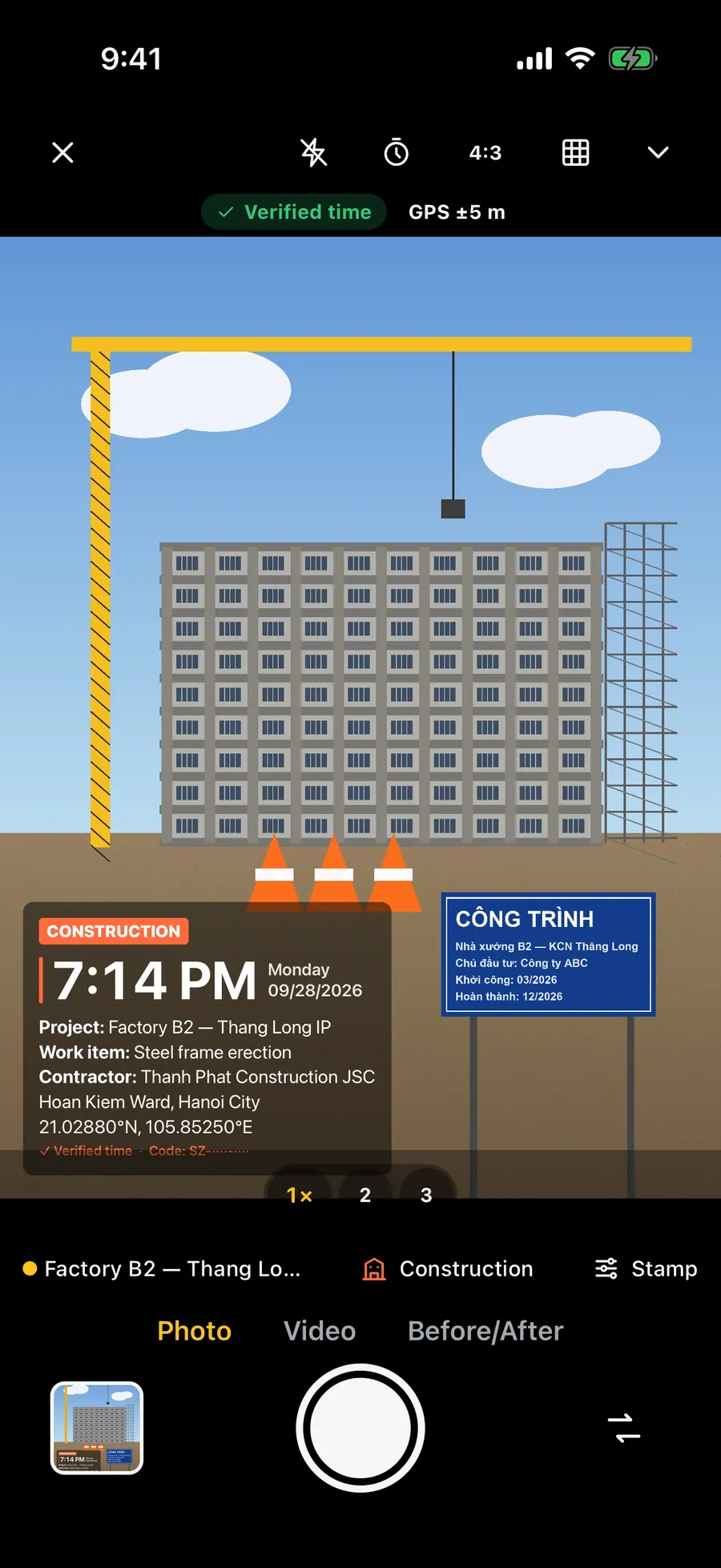
The iPhone saves the date, time and, if allowed, the location in each photo's hidden data. That data can be lost when a photo is sent through a chat app or an airline's web form, and it is invisible to the person reading your claim. A photo that shows the date and place in the picture itself, taken at the belt, makes the sequence easier to follow.
Check the phone's clock after landing. A phone that has not yet switched to the local time zone can put the wrong time on photos, and you can read more about that in our guide to the wrong time when you travel. Do not edit the photos in a way that changes how the damage looks.
Frequently asked questions
- What should I do if my suitcase is damaged on a flight?
- Do not leave the baggage hall. Photograph the bag and the damage, then report it at the airline's baggage desk and ask for a written report with a reference number. Afterwards send your claim to the airline in writing with the photos and receipts.
- How long do I have to claim for damaged luggage?
- It depends on the airline and the route. On many international flights covered by the Montreal Convention the written deadline is commonly 7 days from receiving the bag for damage and 21 days for delay. Report at the airport the same day and check your airline's conditions.
- What is a Property Irregularity Report?
- It is the report an airline's baggage desk writes when a bag is damaged, delayed or lost. It carries a reference number. Ask for a copy or photograph it, because the claim will need it.
- Which photos do I need for an airline baggage claim?
- The whole bag, the luggage tag and baggage receipt, each damage in close-up with something to show size, the inside if items are broken, and the airline's report. Keep receipts for the bag and for anything you had to buy.
- Will the airline pay the full price of my damaged bag?
- Usually not. Airlines generally pay the current value of the item, not the price you paid or the cost of a new one, and many do not cover ordinary wear and tear. Limits differ by airline and country.