How to photograph mold or damp in a rental home to send to your landlord
Updated · 4 min read
Photograph each affected spot three ways: a wide shot of the whole room so the location is clear, a close-up with something for scale, and a shot of the likely cause, such as a leaking pipe, a window with condensation or a stained ceiling above. Then repeat the same shots every week or two. Photos taken on different dates show whether the problem is growing, and show that you reported it when you first saw it.
Mold is called mould in British English; the advice is the same. This guide is about the photos. Tenant rights, notice periods and who must pay for repairs differ by country, state and contract, so check your local rules or a tenants' organisation; this is photo advice, not legal or health advice.
What should I photograph first?
1. A wide shot of the room from the doorway, so anyone can see which room it is and where the problem sits.
2. A medium shot of the affected wall, ceiling or corner, including the nearest window, door or fixture.
3. A close-up of the mold or the stain, with something for scale next to it, such as a coin, a ruler or your hand.
4. The likely source: a dripping pipe, a damp patch under a sink, a blocked gutter, a gap round a window, a stain on the ceiling that points to the floor above.
5. Things the damp has reached: peeling paint, a swollen skirting board, a mouldy curtain, a damaged mattress or clothes. Photograph them before you throw anything away.
6. If you have a cheap humidity meter, a photo of its display next to the wall or in the room.
How often should I repeat the photos?
Take the same shots from the same spot once a week or once every two weeks, and more often after heavy rain or a leak. Stand where you stood before, or put a small piece of tape on the floor, so the photos line up. If the mold is spreading, the dated photos show how fast; if it is getting better, they show that too.
What else should I keep besides photos?
- A short written log: the date you first noticed it, what you saw or smelled, and when you told the landlord or agent.
- Every message you send and every reply. Send reports in writing, by email or by the method your lease names, and attach the photos. Many places expect formal written notice, so check what counts where you live.
- Photos of the property before the problem, such as move-in photos, if you have them. They show the wall was clean when you arrived.
- Receipts for anything you had to buy or replace because of it.
- If it affects your health, write the symptoms and dates down and talk to a doctor. Photos do not replace medical advice, and it is up to you whether to share health details with anyone.
Should I clean the mold before photographing it?
No. Photograph it first, exactly as it is. Then decide how to deal with it. Small patches on a hard surface can often be cleaned by the tenant, but a large area, mold that keeps coming back or mold after a leak is usually for the landlord or a professional to deal with. Do not disturb a large patch yourself, and ventilate the room and keep people with breathing problems away from it.
How do I keep the date with the photos?
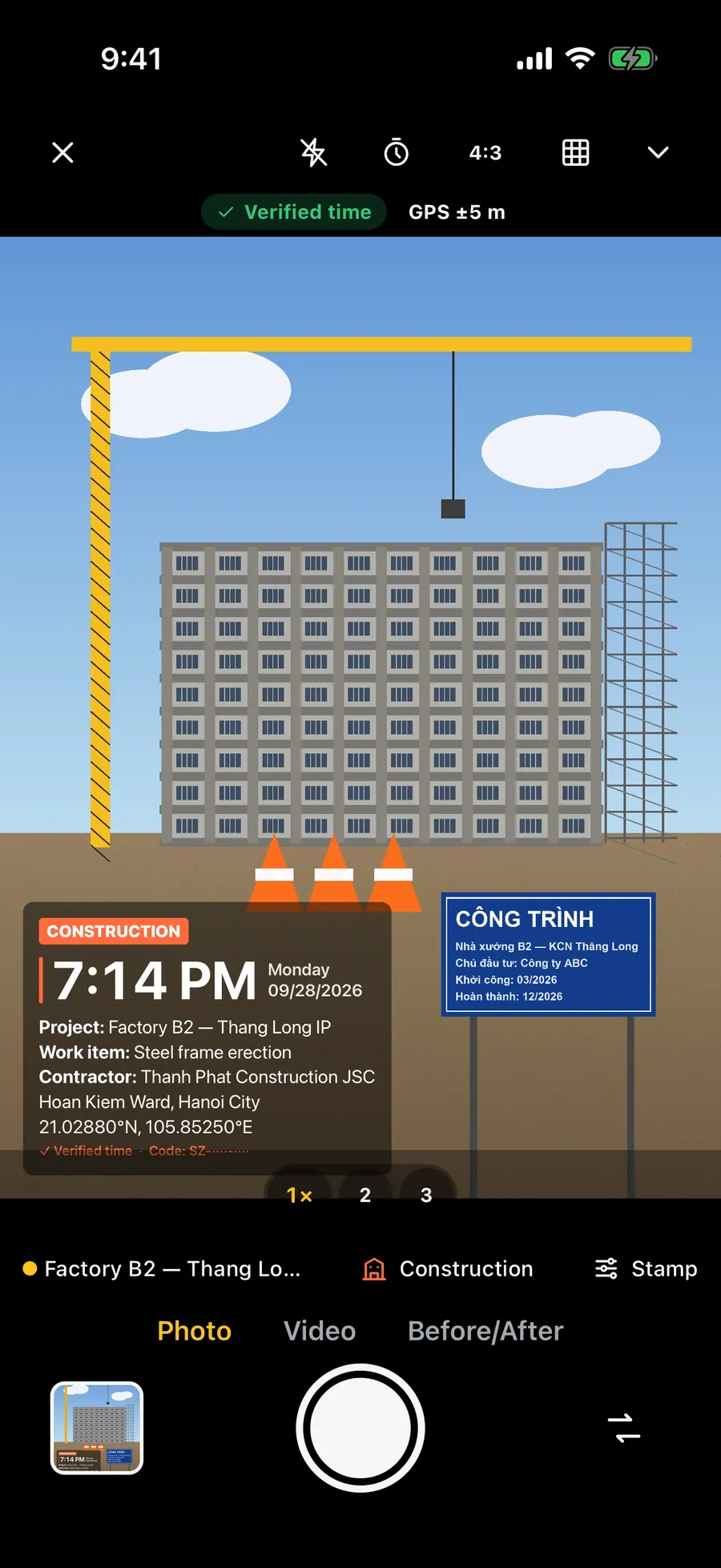
The iPhone Camera saves the date and time in each photo's hidden data, along with the coordinates if Location Services is on for the Camera. That data is often removed when a photo is sent through a chat app or an email client, so the person who reads your message may only see the picture.
Check that the phone's date and time are set automatically, keep the original photos on your phone as well as the copies you sent, and do not edit the photos so that the mold looks different. A date printed on the picture itself stays visible wherever the file ends up.
Frequently asked questions
- How do I document mold in a rental for my landlord?
- Take a wide shot of the room, a medium shot of the wall, a close-up with something for scale and a photo of the likely source. Repeat the same shots every week or two and send your report in writing with the photos attached.
- Should I clean the mold before taking photos?
- No. Photograph it exactly as it is first. Small patches on hard surfaces can often be cleaned afterwards, but large or recurring mold is usually for the landlord or a professional to deal with.
- How often should I take photos of mold?
- Once a week or once every two weeks from the same spot, and more often after heavy rain or a leak. The dated photos show whether the problem is growing.
- Do photos alone prove my landlord must fix the mold?
- No. Photos show what the problem looks like and when you reported it, but your rights and the landlord's duties depend on your country, state and lease. Check your local rules or ask a tenants' organisation.
- Does a timestamp on the photos prove when they were taken?
- No. It makes the date and place easy to see, but it is not proof. Clear, honest, regularly repeated photos sent in writing make your report easier to follow.