How to photograph a pothole or road damage to claim for car damage
Updated · 5 min read
Photograph the pothole before anything else, if you can do it safely: a wide shot that shows the road, a nearby street sign or building so the place is clear, and a close-up with something for scale, such as a tape measure, a ruler or a shoe. Then photograph the damage to your car. Claims for pothole damage usually depend on showing where and when it happened, and the hole can be repaired within days, after which that evidence is gone.
This guide is about the photos. Whether you can claim, from whom, and by when depends on your country, state or city, and many places set short deadlines and ask for a written claim, so check the authority's claim page or ask your insurer. This is photo advice, not legal advice.
Safety first
Do not stand in traffic. Pull over somewhere safe, switch on your hazard lights, and photograph from the pavement or the verge. If the hole is in a busy lane and you cannot reach it safely, photograph it from a distance and come back when traffic allows, or report it and let others know where it is. No photo is worth an accident.
What should I photograph at the spot?
1. A wide shot from a few metres away that shows the hole, the lane and the road around it.
2. The place: a street sign, a house number, a lamppost number, a junction or a landmark in the same frame as the hole, or in a photo taken right next to it.
3. A close-up from above with something for scale next to the hole. Photograph a tape measure laid across it if you have one.
4. The depth: lay a straight object such as a ruler or a stick across the hole and measure down to the bottom, then photograph the measurement.
5. Signs that the hole has been there for a while: crumbling edges, patches of old repairs, other drivers' debris such as plastic from bumpers or hubcaps. A photo of a freshly broken edge looks different from one that has been there for months.
6. If there are warning cones, paint marks or signs, photograph those too. If there are none, a photo of the same view without them is also useful.
What should I photograph on the car?
- The damaged part from several angles: the tyre sidewall bulge or cut, the bent wheel rim, the scraped underside, the cracked suspension part. Take a wide shot of the whole wheel, then a close-up of the damage.
- The whole car, so the make, colour and number plate are in one shot. Photograph the plate on its own too.
- Anything that shows the car was fine before: a recent service record, an earlier photo of the wheel, or a photo of the tyre from the last time you checked it.
- The warning lights or the display, if the impact set one off, and the odometer reading.
Do not move or repair anything until you have photographed it. Keep the damaged tyre or part if you can; the person assessing the claim may want to see it.
What else should I keep?
- The date, the time and the place: the street name, the nearest junction and, if you can, the direction you were driving.
- Repair estimates and receipts, in writing, with the garage's name. A mechanic's note saying the damage is consistent with a pothole is worth asking for.
- The names and contact details of anyone who saw it, and your own short written account written while you remember it clearly.
- A copy of your report to the road authority, with its reference number. Many claims depend on whether the authority knew about the hole before you hit it, and on whether it was reported by anyone else.
- Your insurance details and a note of what your excess or deductible is. Ask the insurer before you decide to claim against the authority or through your own policy.
How do I keep the date and place with the photos?
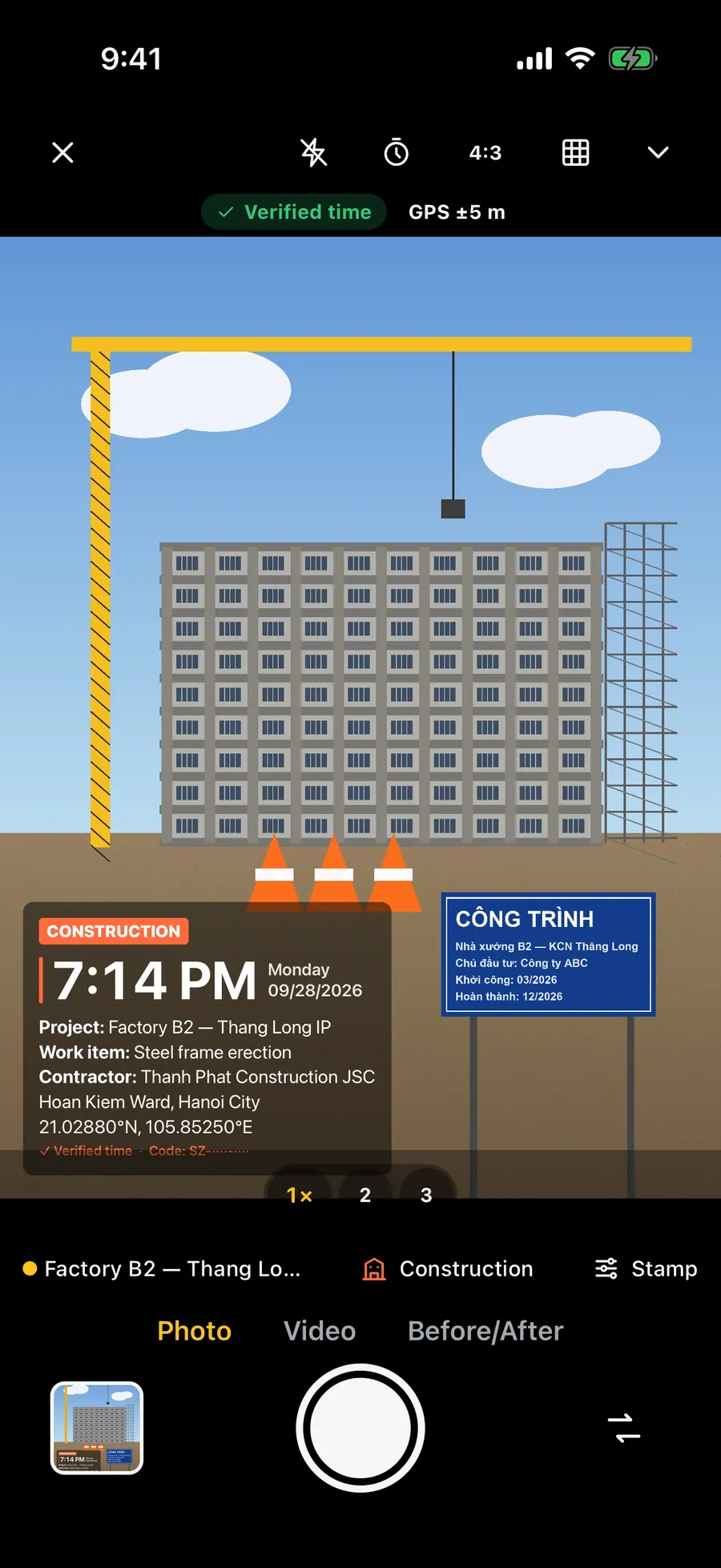
The iPhone Camera saves the date and time in each photo's hidden data, together with the coordinates if Location Services is on for the Camera. That data is often removed when a photo is sent through a chat app, uploaded to a web form or printed, so the person who reads your claim may only see the picture, with no place or time at all.
Check that the phone's date and time are set automatically, keep the originals on your phone as well as any copies, and do not edit or crop the photos in a way that hides the surroundings. A date and a place printed on the picture itself stay visible wherever the file ends up. If the hole has been repaired by the time you file the claim, the dated photos are what you will have left.
Frequently asked questions
- How do I take photos of a pothole for a damage claim?
- Take a wide shot of the hole and the road, a photo that shows a street sign or house number so the place is clear, and a close-up with a ruler or tape measure for scale. Then photograph the damage to your car and keep every repair estimate.
- Should I photograph the pothole before the car?
- Yes, if you can do it safely. The hole may be repaired within days, but the car damage will still be there. Never stand in traffic to take a photo.
- How do I show how deep a pothole is in a photo?
- Lay a straight object such as a ruler or a stick across the hole, measure down to the bottom with a tape measure, and photograph the measurement. A single photo from above does not show depth well.
- Do photos alone mean the council or road authority will pay?
- No. Photos show where the hole was and what the damage looks like, but whether you can claim depends on your country and local rules, often on whether the authority knew of the hole beforehand, and often on a short deadline. Check the authority's claim page or ask your insurer.
- Does a timestamp on the photo prove when it was taken?
- No. It makes the date and place easy to see, but it is not proof. Clear, honest photos taken at the spot on the day, with a written account and estimates, make your claim easier to follow.