Ceiling leaking from the flat upstairs? What to photograph and write down before you clean up
Updated · 5 min read
If water is coming through your ceiling, first make sure it is safe (see below), then photograph and film the leak itself, the stain or drip, the whole room, and every wet or damaged item before you wipe, move or throw anything away. Write down when you noticed it and what you did, and report it in writing to your landlord or building manager, the neighbour above if you can reach them, and your insurer if you have a policy.
These photos do not decide who pays: that depends on the cause, your lease or building rules, your insurance policy and the law where you live, and a leak is often found to come from a shared pipe rather than from one person. But stains dry, items get thrown out and walls get painted, so a dated record taken at the time makes the conversation much easier. This is general advice, not legal advice.
What should I do first, before I photograph anything?
Safety comes first. Do not stand in standing water near sockets, switches or appliances, and do not touch electrics that are wet; if you can reach the fuse board safely and dry, switching off power to the affected area is common advice, otherwise call an electrician or your utility. If the ceiling is bulging, sagging or dripping heavily, keep out from under it, since it can come down. Move valuables and furniture out of the way if it is safe to do so, but photograph them where they were first.
What should I photograph and film?
1. The active leak, if it is still running: a short video showing the water coming through and how fast, because a photo of a stain cannot show that it is still active.
2. The whole room from the doorway, then the ceiling and walls, so the extent is clear.
3. Each stain, bulge, crack or peeling patch up close, with a coin or a tape measure for size.
4. Anything the water has reached: floor, furniture, electronics, clothes, books, one item at a time.
5. The source if you can see it: a wet pipe, an overflowing bath, a light fitting dripping. If it is in the flat above, you may only be able to photograph your own side.
6. Any bucket, towel or tarp you used, which shows you tried to limit the damage.
What should I write down?
- The date and time you first noticed the leak, and when it started or stopped as far as you know.
- Where the water came in and what it touched, room by room.
- What you did: who you called, what you switched off, what you moved.
- Who you spoke to (neighbour, landlord, building manager, plumber, insurer), when, and what was said.
- A list of damaged items with what you think they cost and where you bought them, if you know.
Who should I tell, and how?
Tell your landlord or building manager in writing straight away (a message or an email, with a few of the photos attached), and the neighbour above if you can reach them, because a written message has a date and a phone call does not. If you have home or contents insurance, check your policy and contact your insurer early, since many policies set a time limit for reporting and may want to see the damage before it is repaired. Keep every reply.
What should I keep, and what can I clean up?
Photograph first, then dry and clean what you need to so the damage does not get worse: standing water and wet carpets can lead to mould. Keep badly damaged items, or at least a part of them, until the insurer or landlord has seen them or told you to dispose of them. Keep the repair quotes and receipts as well.
Why take photos again later?
A stain can spread, dry out, or turn into mould over the following days. Photograph the same spots again after a day, a week and when it is repaired, from the same position, so you can show whether it is getting worse and what was fixed. If damp stays on the wall afterwards, see our guide on photographing mould or damp in a rental home.
How do I show when my photos were made?
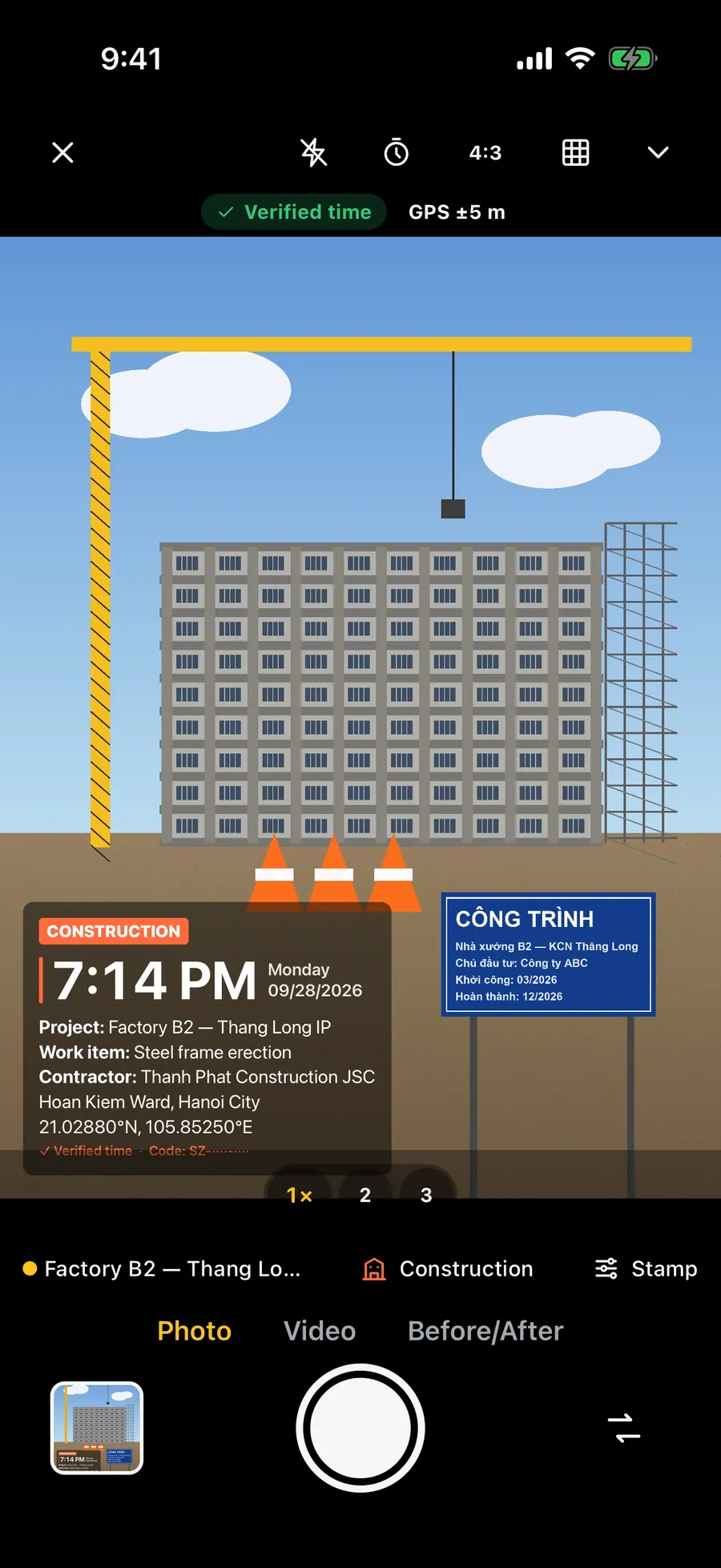
The iPhone Camera saves the date and time inside each photo, but a chat app or an email may strip it. Check that your phone's date and time are set automatically so the saved time is right. A date printed on the image itself stays visible wherever the picture goes.
Frequently asked questions
- What should I photograph when water leaks through my ceiling?
- A short video of the active leak, the whole room, each stain up close, every wet or damaged item, and the source if you can see it. Do it before you wipe, move or throw anything away.
- Is it safe to switch off the power during a ceiling leak?
- Do not stand in water near electrics or touch wet electrics. Switching off the affected circuit from a dry, safe spot is common advice; otherwise call an electrician or your utility.
- Who do I tell about a leak from the flat above?
- Your landlord or building manager in writing, the neighbour above if you can reach them, and your insurer if you have a policy. A written message carries a date; check your policy for reporting deadlines.
- Should I clean up before the insurer sees the damage?
- Photograph and film first, then dry what you must to stop it getting worse. Keep badly damaged items, or part of them, until the insurer or landlord has seen them or said you can dispose of them.
- Will these photos prove my neighbour has to pay?
- No. Who pays depends on the cause, your lease or building rules, your insurance and local law. Dated photos only help show what the damage looked like and when.